

Table Of Contents
A distributor can receive two quotations for the same nominal size and GPD and still be looking at two different service propositions. One element may drop into the installed housing and meet the required output on the existing pump. The other may need a different restrictor, fail to meet the water quality target, or come from a production lot that cannot be traced back to the approved sample. The difference becomes visible after the order, when an installer has to make a second visit or a buyer has to hold stock.
Use size and GPD to build the shortlist. Approve a replacement only after checking its sealing interfaces, its performance in the intended system, and the supplier's ability to deliver the tested configuration by lot. For a distributor, those checks answer four separate questions: will it fit, will it perform, is the membrane the part that needs replacing, and can the result be repeated at scale?

Figure 1. A residential RO membrane replacement guide for distributors covering housing fit, rated output, and batch consistency.
1. Check physical fit and operating fit separately
A buyer often starts with, “Can I use the same housing?” Ask for the exact machine and housing revision before answering. A nominal family code is a useful search term. It tells you where to look, while the element drawing tells you what actually has to mate with the housing. Even a drawing from the right supplier can be misleading if it represents an older housing or a different end cap. Take the housing identification from the installed unit or production sample and compare it with the revision on the drawing.
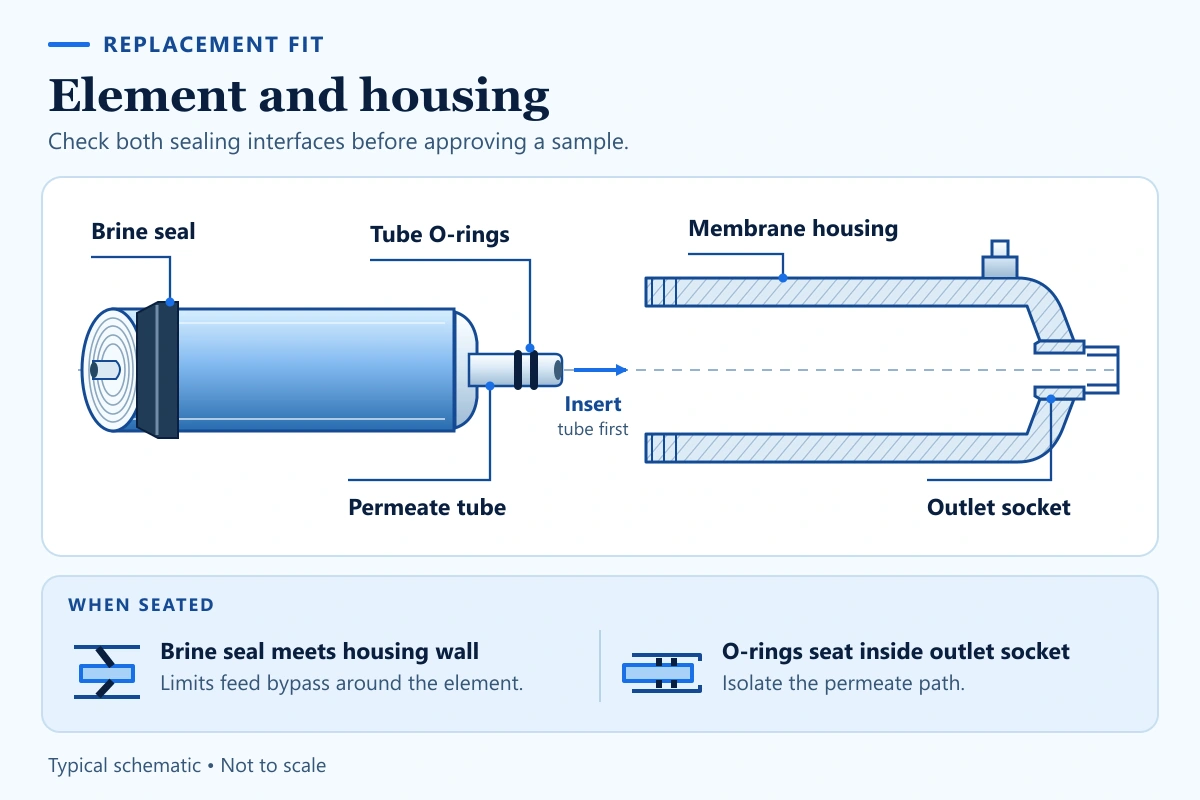
Figure 2. Check where the outer brine seal contacts the housing bore and where the permeate tube O-rings seat in the outlet socket.
Compare the interfaces that make the seal
Start with the center tube. Compare its outside diameter at the sealing surface, the O-ring locations, and the distance from the end of the element to the position where the tube seats. The housing cap can close before the tube has engaged fully. A poorly seated tube or damaged seal can allow higher-conductivity water to enter the permeate path. A Hydranautics technical bulletin on element construction and damage[1] documents leakage into the permeate side as one possible failure mechanism. Its industrial examples explain the mechanism. The fit decision still comes from your housing and its mating parts.
Then check the brine seal around the outside of the element. Its job is to limit feed bypass around the element and direct feed along the intended channels[2]. That is a different interface from the center tube O-rings, which isolate the permeate path. Check the seal direction, where it contacts the bore, and whether it rolls or scrapes during insertion. On an encapsulated replacement, check the mating manifold and connections as well. Record what the factory is supplying with the element, including any preinstalled seals, so that the part approved in the trial matches what a service technician receives.
| Interface | Drawing or sample check | What to investigate if it differs |
|---|---|---|
| Permeate tube | Diameter, extension and seating surface | Incomplete engagement or leakage into permeate |
| Tube O-rings | Groove positions, condition and fit | Pinched seal or loss of separation between water paths |
| Brine seal | Location, direction and contact with the bore | Feed bypass around the element |
| Housing and cap | Bore, stop, available depth and closure | Interference, poor seating or leakage |
Confirm fit on the production housing
Have a qualified technician assemble the sample with the intended seals and housing, using the system maker's procedure. Check that it reaches the stop without excessive force. If insertion is unusually tight, inspect the seal and bore before proceeding. If the sample feels loose, confirm actual engagement rather than using cap closure as the pass criterion. At operating pressure, check for external leaks and take paired conductivity readings after the prescribed flush and stabilization. An assembly can remain dry on the outside while leaking internally. Include a restart check if the product is sold into installations that sit idle between draws.
A useful fit report names both the element and housing revision and identifies the particular unit that was tested. One successful fit in an unused bench housing is weak evidence for a service fleet that includes earlier revisions. If the supplier cannot provide a reliable drawing for an older housing, treat that revision as a separate application. A short list of confirmed machine versions gives the installer a better answer than a broad compatibility claim on the carton.
Decide whether the substitution changes the machine
A higher rated membrane can change the operating balance. What matters is the running pressure at the membrane, the flow available through the prefilters and pump, and the concentrate flow through the installed restrictor. Ask which components can stay, which need to change, and who supplies the revised parts. Express Water's own 50-to-100 GPD upgrade guidance[3] identifies the membrane and flow restrictor among the parts that change on its system. That example shows why the quotation should name the complete configuration.
Measure permeate and concentrate flows under the same operating conditions. For steady single-pass operation without recycle, divide permeate flow by the sum of permeate and concentrate flows to calculate recovery. Higher recovery can concentrate scale-forming ions, as DuPont's RO technical note[4] explains. The practical question is whether the actual feed chemistry and operating limits support the proposed configuration. Ask for measured flows and the assumptions behind the restrictor selection before using a water-saving claim or ordering stock. When an upgrade needs a revised kit, price that kit and the field work alongside the membrane.
2. Read GPD with its conditions and set two acceptance gates
GPD is a rate. On a membrane data sheet it describes permeate production at stated conditions. On a customer's counter the question is often how quickly a tank refills or how much water is available during a draw. These are separate measurements. Use the element data sheet to screen candidates and the installed-system test to decide whether either candidate meets the actual requirement.
When a quote gives a GPD figure, request the feed solution, its concentration, applied pressure, temperature, recovery, and any reported pH. Record the source and revision. A sales sheet that repeats a number without its conditions loses the basis of comparison. The DuPont sheets below also show how permeate flow changes with pressure and temperature. When one trial uses warmer feed than another, treat the temperature difference as an alternative explanation for the apparent gain. A comparable retest is usually more useful to a buyer than an assumed correction factor.
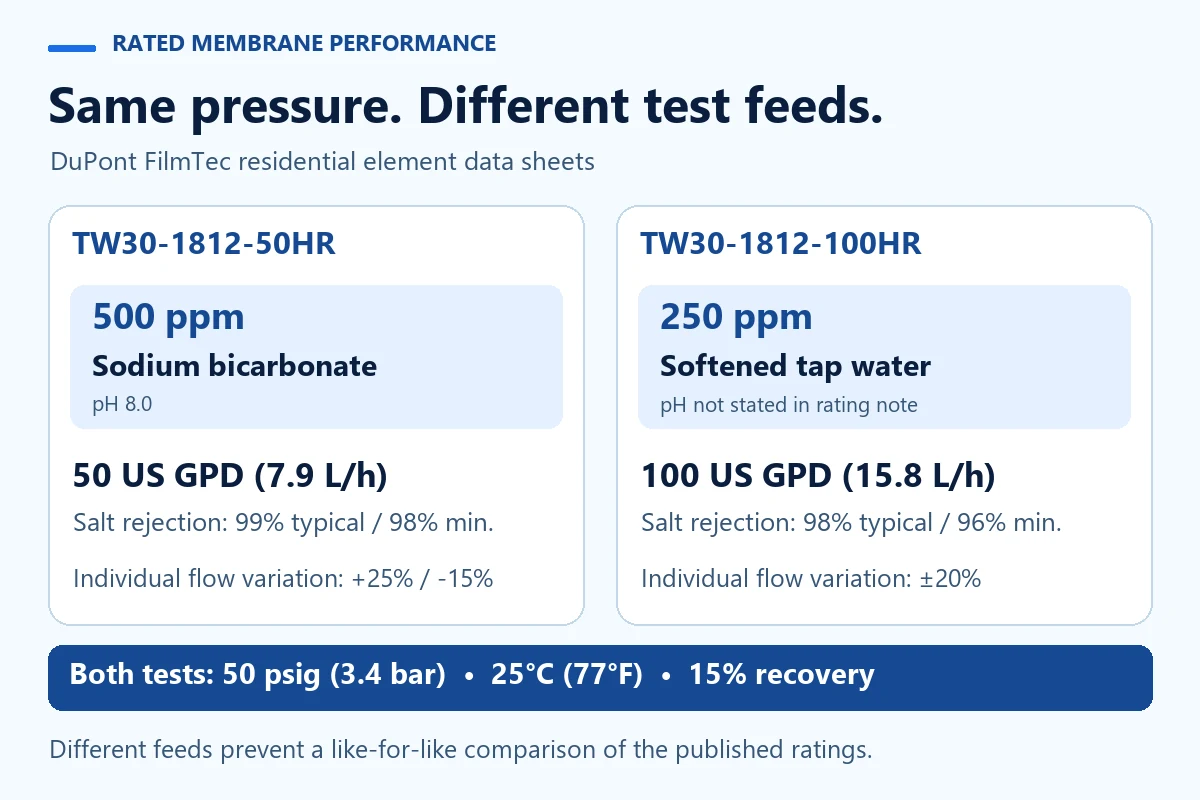
Figure 3. The 50HR rating uses 500 ppm sodium bicarbonate, while the 100HR rating uses 250 ppm softened tap water. The published ratings use different feeds.
Two FilmTec models, two published test feeds
The TW30-1812-50HR data sheet[5] and TW30-1812-100HR data sheet[6] report the same dimensions for the two elements. Their first pages give these ratings and test conditions.
| Published item | FilmTec TW30-1812-50HR | FilmTec TW30-1812-100HR |
|---|---|---|
| Data sheet | 45-D01750-en Rev. 5, January 2021 | 45-D01697-en Rev. 8, December 2022 |
| Rated permeate flow | 50 US GPD (7.9 L/h) | 100 US GPD (15.8 L/h) |
| Typical stabilized salt rejection | 99% | 98% |
| Minimum salt rejection | 98% | 96% |
| Individual element flow variation | +25% / −15% | ±20% |
| Applied pressure | 50 psig (3.4 bar) | 50 psig (3.4 bar) |
| Temperature and recovery | 25°C (77°F), 15% | 25°C (77°F), 15% |
| Feed used for rating | 500 ppm sodium bicarbonate (NaHCO₃), pH 8.0 | 250 ppm softened tap water, pH unspecified in the rating note |
The stated flow variations give 42.5–62.5 GPD for the 50HR and 80–120 GPD for the 100HR when calculated from their respective ratings. Those ranges inherit the test conditions. The feeds differ in both concentration and composition, even though the applied pressure, temperature and recovery match. The table cannot tell you that the higher rated model will double output in the same machine, or that either model will have better rejection or longer life on the same local water. It does tell you which published figures belong on the quote and what has to be tested before making that comparison.
Ask the supplier to identify what its rejection figure represents. A typical stabilized value describes a typical result under the stated test conditions. A minimum is the published lower bound under those conditions. Neither is a measurement of the lot you are about to receive. If your quote says “99% rejection,” ask whether it means a typical rating, a guaranteed minimum on a named feed, or a measured sample result. The answer determines what evidence is available if a later lot fails.
Set the flow gate and the quality gate independently
Write a minimum usable permeate flow and a separate water quality criterion for the assembled system. Describe the intended feed, temperature range, pump and restrictor, tank condition or permeate pressure, and when readings should be taken. In a comparative trial, keep the housing and sampling method the same where practical. If the upgrade requires another restrictor or pump, document the changed configuration and test it as supplied. A flow pass does not clear a quality failure, and a strong rejection number does not make a slow refill acceptable.
For a conductivity screen, use calibrated readings on the same temperature basis. Take feed at the membrane inlet, after the pump in a boosted system, and permeate before storage, blending, or remineralization. Calculate apparent conductivity rejection as 100 times one minus permeate conductivity divided by feed conductivity. Hypothetical example: feed at 400 µS/cm and permeate at 20 µS/cm give 95% apparent rejection. The calculation is a useful comparison for paired readings. A specific contaminant reduction claim requires evidence for that contaminant and the relevant product or system.
A separate recovery example shows why both flow readings matter. Hypothetical readings: 0.15 L/min of permeate and 0.45 L/min of concentrate give 25% recovery. If permeate rises to 0.225 L/min while concentrate stays at 0.45 L/min, recovery rises to about 33.3%. Neither set is a recommended operating point. A quote that only supplies the permeate number leaves the buyer unable to assess whether the installed system will run at the intended recovery.
Choose representative feedwater using more than one TDS number. Two supplies with similar conductivity can differ in hardness or other constituents that affect how the system runs. If the distributor covers several installations, agree which conditions the trial covers and identify the ones that need separate testing. A short operating envelope with a recorded comparison is more useful than a promise to work on any local water.
3. Diagnose the system before ordering another membrane
“The tank fills more slowly since the swap” describes a symptom. It does not identify the part responsible. Before changing the SKU, establish whether the complaint is slow tank refill, poor faucet delivery, or high conductivity. Then record the measurement point and the operating state. A reading at a static inlet or at a treated-water faucet may be valid for that point and still answer a different question from the one the buyer is asking.
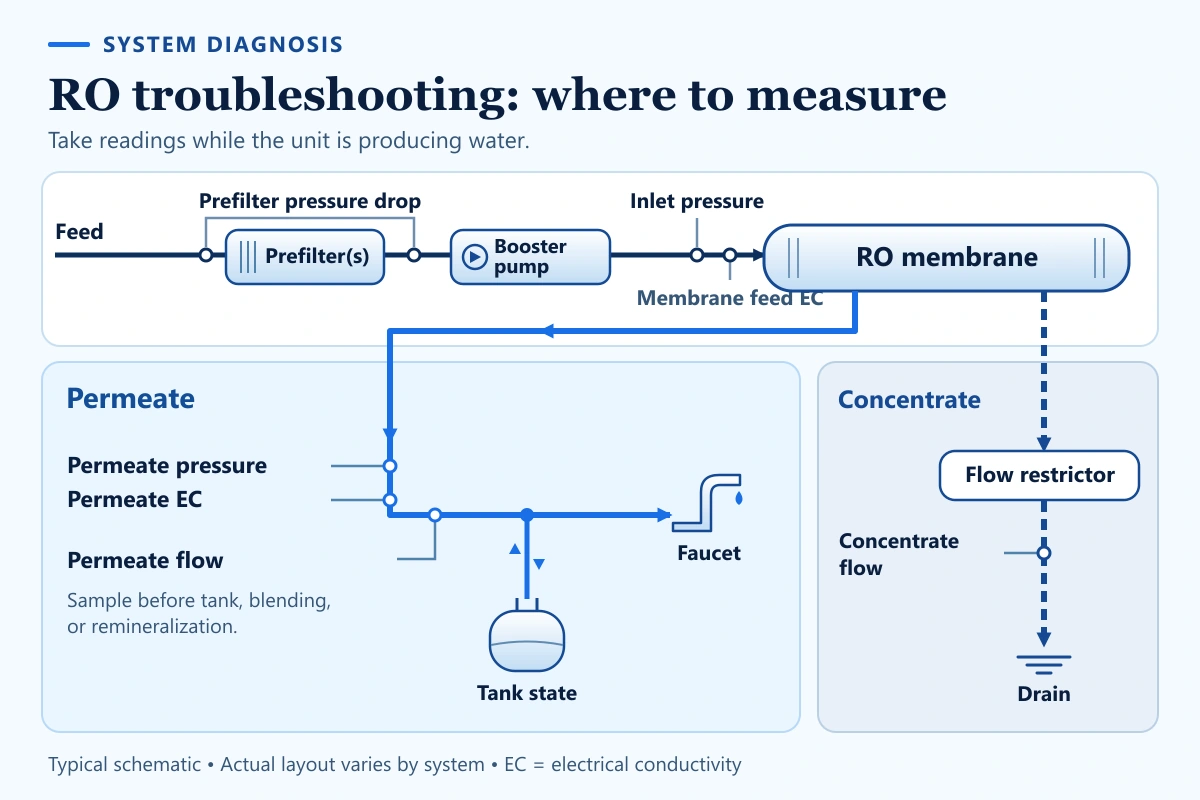
Figure 4. Measure feed conductivity at the membrane inlet after the pump, and permeate conductivity before the storage tank or downstream treatment.
Establish a baseline the next technician can repeat
Record the machine revision, membrane and lot, restrictor, filter service dates, water temperature, and whether the tank was empty, partly full, or near shutoff. Measure pressure with the unit producing, including at the membrane inlet. Where the system provides suitable test points, take readings on both sides of the prefilters during the same run. Record permeate and concentrate flows during a stable interval and note any changes to pump cycling or automatic shutoff. Use the system maker's service procedure when setting up test points or isolating components.
A distributor with several complaints should ask for the same minimum record on each one. Similar symptoms across one lot under comparable conditions warrant a different investigation from complaints spread across different lots, cold feeds, or installations with overdue prefilters. Avoid comparing an early reading from a drained test setup with a later reading from a tank that is nearly full. A matched baseline can also make a good replacement visible when the faucet experience has been dominated by another restriction.
| Reported symptom | First readings | Next decision |
|---|---|---|
| Slow tank refill | Running membrane inlet pressure, permeate flow, tank state | Separate weak production from storage and shutoff behavior |
| Slow faucet delivery | Tank state and flow through the delivery path | Check tank, post-filter, tubing and faucet if production is normal |
| High conductivity | Paired membrane feed and pre-storage permeate readings | Separate membrane or seal issues from downstream effects |
If the tank fills slowly, check production and backpressure
Start with running pressure rather than a gauge reading taken before the system starts. If membrane inlet pressure drops while the unit is producing, compare the pressure across the prefilters, then check supply and pump behavior under load. The pump nameplate does not tell you the pressure available at the membrane after line losses. If the inlet pressure looks normal, compare permeate and concentrate flow with the approved configuration and look for a different or restricted drain path.
Storage pressure matters too. Watts' residential RO guidance[7] describes storage-tank backpressure as a factor its permeate pump is designed to reduce. As the tank state changes, a production reading can change even with the same membrane. Take comparison readings at a similar tank state and use the tank maker's procedure and specification if precharge needs checking. If controlled membrane production is within the approved range but refill is slow, investigate the tank, check valve and shutoff behavior before requesting another membrane.
If faucet flow is low, trace the delivery side
Ask whether the complaint starts with a full tank or only after several draws. A full tank with weak delivery points toward the storage and delivery path, including tank condition, valves, tubing, post-filter and faucet. A strong first draw followed by a rapid drop can warrant a check of usable tank drawdown and refill. Keep the observations separate. A timed faucet draw is useful for the user experience, while a stabilized membrane reading is useful for qualifying the element.
When comparing installations, record whether the water was drawn after a long idle period or during a period of heavy use. Those details help the service team reproduce the symptom. If a downstream restriction is identified, correct it and repeat the same test. Replacing the element at the same time would make it harder to tell which change solved the problem and whether another order is justified.
If conductivity is high, locate where it rises
Compare the membrane inlet and permeate outlet first, before the product water passes into the tank or through a blending or remineralization stage. If membrane permeate is within the agreed range but the faucet reading is higher, investigate what happens downstream. If the difference is confined to the first water after an idle period, record the first draw and the stabilized reading separately. The EPA WaterSense supporting statement[8] describes idle-period TDS creep and the role of flushing on applicable systems.
If stabilized membrane permeate is high, verify feed chemistry, running pressure and recovery, then check seating and the tube O-rings. DuPont's explanation of net driving pressure[4] accounts for the hydraulic pressure difference and the osmotic pressure difference. The practical implication is to restore the agreed operating conditions before comparing rejection. Low pressure can be a clue, while the test still has to distinguish a pressure problem from internal bypass, feed changes or element damage.
Check the exact membrane's pretreatment requirements when oxidant exposure is suspected. The two FilmTec sheets above identify these models as thin-film composite polyamide and list free chlorine tolerance below 0.1 ppm[6]. DuPont also recommends removing residual free chlorine before membrane exposure. Use the candidate's own specification and test at the appropriate point after pretreatment. The published limit for these models does not provide a universal service interval for carbon filters or prove the cause of a particular failure.
4. Turn sample approval into a bulk-order and service agreement
A sample answers whether one documented configuration passed. A bulk purchase asks whether the supplier can deliver that configuration again, show which units were checked, and identify stock affected by a later issue. Put the trial record and lot terms into the purchase discussion while the supplier still has time to clarify what it can test and what it will record. A promise to match the sample is difficult to act on if neither side can identify which drawing or operating conditions the sample represented.
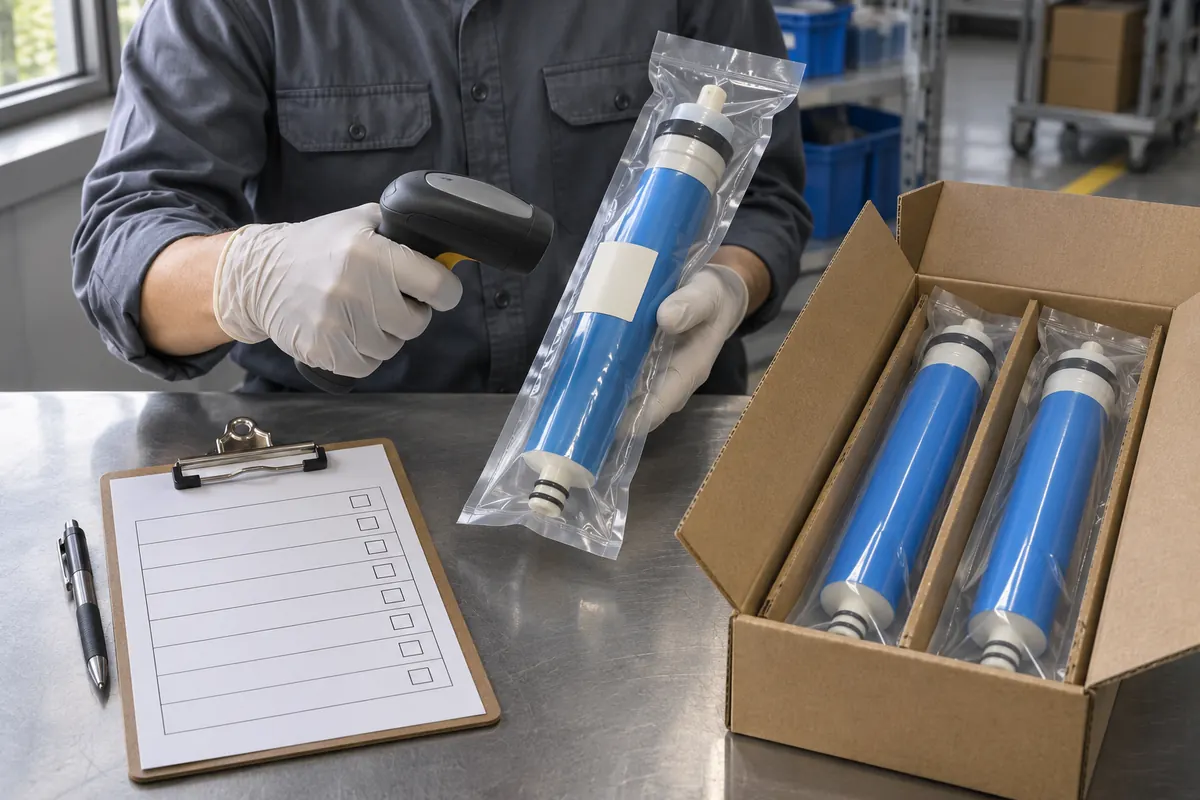
Figure 5. AI-generated illustration of an incoming inspection. Match the packaged element and carton identifiers to the lot report.
Freeze the approved configuration and acceptance method
Record the sample model and lot, label photos, element and housing drawing revisions, and the exact pump, restrictor and pretreatment used. Keep the actual feed and temperature, running inlet pressure, permeate pressure or tank state, flush procedure, sampling locations, and stabilized results together. Where retained samples make sense, agree on identification and storage requirements with the manufacturer. A retained sample stored outside its specified conditions can introduce another variable into a comparison.
Turn each acceptance limit into a test instruction. For flow, specify the minimum, units, pressure, temperature, feed and stabilization point. For water quality, specify the measurement, where to sample and which acceptance threshold applies. Decide whether the supplier's bench report and the buyer's assembled-system check serve different purposes. The first can track lot consistency on a controlled setup. The second verifies the outcome in the intended machine. Record both criteria if both matter to the order.
Ask who selects units for lot testing, what qualifies as one lot, what the factory tests, and how it reports an out-of-limit result. Agree what happens while a result is reviewed. A practical plan identifies who holds the affected stock, who performs the repeat measurement, and which method resolves differences between the factory and the distributor. Keep the acceptance limits and report format with the order so the receiving team has the same instructions as the buyer.
Verify identification, packaging and change control
Match the element or sealed pack label to the outer carton and the lot report. The receiving team should be able to isolate one lot without guessing which cartons belong to it. Check that seals and end protection arrive intact, and ask the manufacturer for shipping condition, storage limits and handling instructions for the exact element. An intact carton does not establish that an inner pack remained sealed. A label photo, carton identifier and lot report can make a transit or storage question much easier to investigate.
Agree which changes require notice, a fresh sample, or requalification. A change in the tube, end cap or seal can reopen the fit decision. A change in membrane construction or in the approved hydraulic parts can reopen the performance decision. A packaging change may instead require a storage and transit review. Classify the change by its effect and name who authorizes it before stock ships. That lets a buyer distinguish a documented revision from an unapproved substitution.
Price the complaint path before signing the order
Ask who receives the diagnostic record, who can authorize a stock hold, and who pays for the replacement part, local service and freight in each agreed situation. A supplier offering a free membrane may still leave the distributor carrying most of the cost of a second visit. Conversely, when the problem is in the system, the service record should help the installer resolve it without returning unrelated stock. Put the evidence requirements and responsibilities in the agreement instead of discovering them with a customer waiting.
Hypothetical break-even: saving $0.60 on each of 1,000 elements reduces the purchase cost by $600. At $60 per additional service incident, ten incidents absorb the saving. That is a cost threshold under assumed inputs, not a forecast of returns. Use your own labor, freight and support terms. If the proposed swap also requires field kits, installer training or extra testing, add those costs and avoid counting the same service expense twice.
A buyer can approve several configurations if each has a defined use and its own record. Avoid pooling stock under a single replacement claim just because the labels share a family code. The distributor should know what is stocked for existing machines, what is sold only as an upgrade kit, and what evidence a technician should capture before a warranty decision. That is where qualification becomes commercially useful.
Frequently Asked Questions
Can a 100 GPD membrane replace a 50 GPD membrane?
Only after checking the system configuration and verifying flow and water quality in a representative trial. Confirm which components, including the flow restrictor, have to change before approving the substitution.
Can I compare rejection percentages on two different data sheets?
Use the stated values to shortlist. For a comparative claim, check the test feeds and conditions or run both candidates in a comparable setup. Typical stabilized and minimum values also answer different questions.
Where should I sample for a membrane conductivity complaint?
Sample at the membrane feed and at the permeate outlet before storage or downstream treatment. Use a faucet sample separately to investigate what happens after the membrane.
What links an approved sample to a bulk order?
An exact model and configuration record, agreed acceptance limits, and a lot identifier that ties the delivered stock to its report. The order should also state what changes require notice and requalification.
Conclusion
A qualified replacement has a defined machine fit, an operating result on representative water, and a record that follows the element from sample to stock. Use the published ratings to decide what to test, measure flow and quality separately, and diagnose an existing complaint before ordering another SKU. Then carry the acceptance limits, lot identification and service responsibilities into the purchase terms. When discussing a substitution with MuphoenixEco, start with the housing and element details, the running readings, and the outcome the installer needs. Those inputs make it possible to compare proposals on the work they must do in the field.
References
- [1]
- [2]
- [3]
- [4]
- [5]
- [6]
- [7]
- [8]

Environmental technology and smart eco-appliance solutions.
Share the housing and membrane model, feedwater conditions, and measured flow or conductivity with our team to discuss fit and qualification for your application.

